
Pruning tropical bonsai through a Miami summer

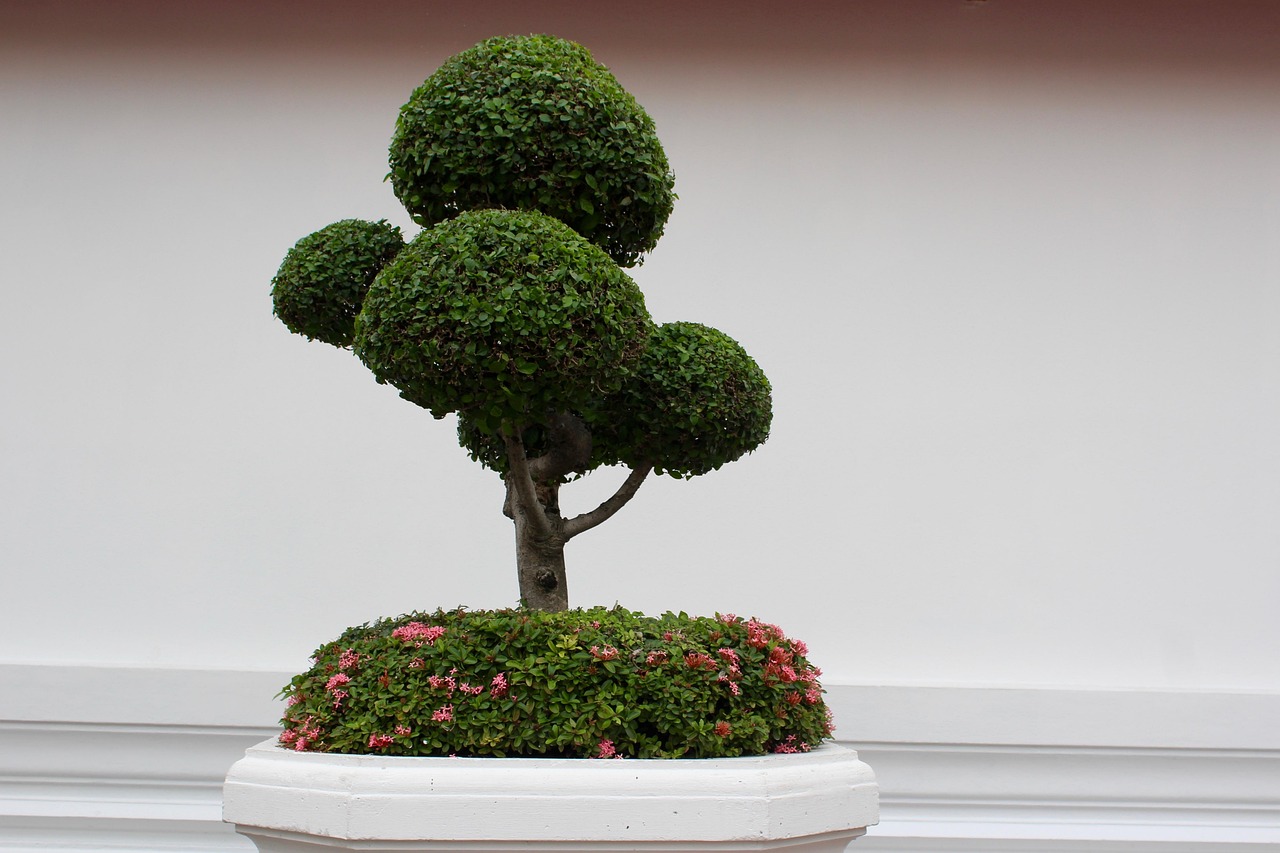
Pruning tropical bonsai through a Miami summer
Most bonsai pruning advice assumes a tree that stops growing in winter, and it schedules everything around that pause. Tropical species in south Florida do not pause, which changes both the timing and the frequency.
What year-round growth means
Ficus, bougainvillea, buttonwood, sea grape, Brazilian rain tree and similar species slow in the cooler months and keep going. That has three consequences.
You prune more often. A ficus can extend several inches in a warm wet month. Waiting for a single annual prune means the internodes get long and the silhouette is lost.
Recovery is fast. A hard cut in early summer will have back-budded within weeks. This makes the species forgiving and lets you be more decisive than temperate advice suggests.
Timing matters less, weather matters more. Which month is less important than what the following fortnight is going to do.
Pinching versus cutting
Two different operations with different purposes.
Pinching — removing the soft growing tip with fingers or fine scissors as soon as a shoot has extended a few leaves. This is maintenance: it keeps the outline, encourages branching and reduces leaf size over time. On a vigorous ficus in summer this is a weekly job.
Structural pruning — cutting back to a chosen point to redirect growth or remove a branch. This is done a few times a year and needs a concave cutter for anything coming off the trunk.
Doing only the second and never the first is why trees develop long bare branches with foliage only at the ends.
Timing structural work
Late spring into early summer is the strongest period for tropical species here — the tree has maximum energy and the longest warm season ahead of it to recover.
Avoid hard pruning in the coolest part of the year, when growth slows and a large wound sits open longer.
Also avoid it immediately before a stretch of heavy rain, which brings us to the wet season.
What the wet season does to a fresh wound
Miami summers are hot, wet and humid — ideal conditions for fungal growth. A fresh pruning wound is an entry point, and one that stays permanently damp is at real risk.
Three precautions:
- Seal larger cuts. Cut paste over anything bigger than a pencil, particularly on species prone to dieback.
- Cut in the morning of a dry day where you can, so the wound has hours to callus over before rain.
- Sterilise between trees. Isopropyl alcohol on blades. It takes seconds and prevents the one thing that spreads across a whole bench.
Airflow helps more than anything else. A crowded bench in a wet August is where fungal problems start, and thinning the interior of a canopy is as much about air movement as about shape.
Defoliation
Removing all or most of the leaves to force a second flush with smaller leaves. It works well on vigorous tropical species and is a real technique rather than a trick.
Two conditions. The tree must be strong — never defoliate a tree that has just been repotted or is recovering. And it must be early enough in the warm season for a full second flush, which here means late spring or early summer, not August.
Partial defoliation — removing the largest leaves and leaving the rest — is gentler and achieves much of the same balancing effect.
Aerial roots
Ficus in this climate produces aerial roots enthusiastically, and humidity encourages them. Whether they are a feature or a nuisance is a design decision.
Where you want them, guide them down to the soil, and they thicken into trunk. Where you do not, remove them early with scissors while they are thin; once one has reached the soil and thickened it is a structural element rather than a root.
Tools for the routine
Twig scissors do almost all of it. Long, narrow blades reach inside the canopy and take a shoot without damaging what surrounds it. If you buy one good tool, buy these.
The concave cutter comes out for structural work and for anything coming off the trunk. Wire cutters come out when a season of growth has caught up with the wire, which in this climate happens faster than anywhere.
After pruning
Do not fertilise heavily straight after a hard prune — feed once the new growth is moving. Do not repot and hard-prune in the same month; that is two major stresses at once, and one is enough.
Keep an eye on the wire on any branch you have just pruned. Removing foliage sends energy into what remains, which thickens fast.
Where to look
Twig scissors, concave cutters and shears are on the cutters and shears page. Complete kits are at bonsai tool sets, wire and wire cutters at training wire, and the repotting tools at tweezers, rakes and repotting.